

Thomas Tallis Biography - A Very Quick Guide
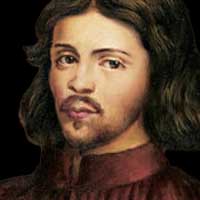
Artist:
Thomas Tallis
Born:
c.1505
Died:
1585
Who Was Thomas Tallis?
Thomas Tallis (c.1505–1585) was an English composer whose career spanned the turbulent reigns of four monarchs. He is regarded as one of the most important figures in early English sacred music, known contrapuntal mastery, and contributions to both Latin and English liturgical traditions.
What Is Thomas Tallis Most Famous For?
Tallis is best known for his choral works, particularly Spem in alium - a 40-part motet considered one of the greatest achievements in Renaissance polyphony. His output includes Latin motets, English anthems, mass settings, psalm tunes, and service music, reflecting the rapid shifts in religious practice during the English Reformation. He also contributed to Archbishop Parker’s Psalter, providing the tune later adapted by Vaughan Williams in the Tallis Fantasia.
What Influenced Tallis’s Music?
Tallis’s style draws on continental Renaissance polyphony, English choral traditions, and the changing demands of the Anglican and Catholic liturgies. Under Henry VIII and Mary I, he wrote elaborate Latin polyphony; under Edward VI, he adapted to simpler, syllabic English settings; and under Elizabeth I, he balanced expressive counterpoint with textual clarity. His exposure to European trends through court connections and printed music helped shape his harmonic and contrapuntal language.
When Was Thomas Tallis Born?
Exact records are lacking, but Tallis was probably born around 1505. Details of his early life are unclear, but he held posts at Dover Priory, Waltham Abbey, and Canterbury Cathedral before joining the Chapel Royal in the 1540s, where he served for the rest of his life.
How Did Thomas Tallis Die?
Tallis died in 1585, likely in Greenwich. The cause is not recorded. His death marked the end of a long and stable career in royal service.
10 Facts About Thomas Tallis
Thomas Tallis (c.1505–1585) was an English composer whose career spanned the turbulent reigns of four monarchs. He is regarded as one of the most important figures in early English sacred music, known contrapuntal mastery, and contributions to both Latin and English liturgical traditions.
What Is Thomas Tallis Most Famous For?
Tallis is best known for his choral works, particularly Spem in alium - a 40-part motet considered one of the greatest achievements in Renaissance polyphony. His output includes Latin motets, English anthems, mass settings, psalm tunes, and service music, reflecting the rapid shifts in religious practice during the English Reformation. He also contributed to Archbishop Parker’s Psalter, providing the tune later adapted by Vaughan Williams in the Tallis Fantasia.
What Influenced Tallis’s Music?
Tallis’s style draws on continental Renaissance polyphony, English choral traditions, and the changing demands of the Anglican and Catholic liturgies. Under Henry VIII and Mary I, he wrote elaborate Latin polyphony; under Edward VI, he adapted to simpler, syllabic English settings; and under Elizabeth I, he balanced expressive counterpoint with textual clarity. His exposure to European trends through court connections and printed music helped shape his harmonic and contrapuntal language.
When Was Thomas Tallis Born?
Exact records are lacking, but Tallis was probably born around 1505. Details of his early life are unclear, but he held posts at Dover Priory, Waltham Abbey, and Canterbury Cathedral before joining the Chapel Royal in the 1540s, where he served for the rest of his life.
How Did Thomas Tallis Die?
Tallis died in 1585, likely in Greenwich. The cause is not recorded. His death marked the end of a long and stable career in royal service.
10 Facts About Thomas Tallis
- He served four monarchs: Henry VIII, Edward VI, Mary I, and Elizabeth I.
- He and William Byrd were granted an exclusive royal monopoly for music printing in England (1575).
- His Spem in alium employs 40 independent vocal lines arranged in eight choirs.
- He wrote in both Latin and English, adapting to shifting religious requirements.
- Very few biographical documents about his early life survive.
- He contributed nine tunes to Archbishop Parker’s Psalter.
- His music strongly influenced the development of English choral practice.
- He is often regarded as the father figure of the English Renaissance tradition.
- His surviving works show a wide stylistic range—from austere homophony to complex polyphony.
- He maintained a reputation for integrity and reliability across multiple religious regimes.
Top Pieces on 8notes by Thomas Tallis