February 11, 2026 | Author: Dominic Nicholas | Category:Repertoire Guides
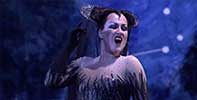
Elina Garanca as Carmen
Bizet’s 1875 opera ‘Carmen’ is perhaps the best-known, best loved opera in the repertoire. So it is surprising to reflect that this great work, with all its vivid and now famous musical numbers, had a controversial and difficult beginning, with its composer not living to witness its phenomenal popularity.
A difficult beginning
Bizet’s early success, winning the coveted Prix de Rome with his cantata ‘Clovis et Clotilde’ in 1857 had not led to him being able to sustain a career as a composer, and for many years he had to supplement his composing with repetiteur and arranging work.
He found it particularly difficult to break into the operatic world, the Paris Opéra and Opéra Comique being conservative institutions that tended to commission more established composers. He had, however managed to stage two operas, ‘Les pêcheurs de perles’ (1863) and ‘La jolie fille de Perth’ (1867) at the independent Théâtre Lyrique, though neither had met with great success.
The commission and libretto
In 1871, a thawing towards him led to a commission to write a one act work for the Opéra Comique. Though this project was also not a great success, it then led to a commission for a full-scale opera. This would eventually become 'Carmen'.
The Opéra Comique traditionally presented light operas with spoken dialogue, stylised plots and morally uplifting themes, so Bizet’s chosen source material spelt trouble from the beginning. Prosper Mérimée’s 1845 novella, ‘Carmen’, is a dark tale of obsession, jealousy, and murder set in Spain. The story centres on a fiercely independent woman who rejects social noms, the plot also featuring smugglers, soldiers, seduction, violence and death.
Even though the libretto, written by Henri Meilhac and Ludovic Halévy, softened these elements, enough remained to make the work problematic. Bizet, furthermore, embraced the nature of the setting by infusing the score with Spanish-inspired rhythms and colours, which would have felt exotic and even alien to Parisian audiences.
The story and musical highlights
Act I – The Square in Seville
Soldiers lounge round outside a cigarette factory. The factory workers emerge, including Carmen, who immediately captivates the men with her bold personality.
Famous moments: Prelude – one of opera’s most recognizable overtures:
Avec la garde montante – also known as the ‘Children’s Chorus’, where a group of street urchins imitate and parody the soldiers:
Habanera ('L’amour est un oiseau rebelle') – Carmen’s sultry declaration that love cannot be tamed:
Carmen throws a flower to Don José, a quiet soldier who is both intrigued and disturbed by her. A fight breaks out in the factory and Carmen is arrested, but she seduces Don José into letting her escape.
Act II – Lillas Pastia’s Tavern
Carmen celebrates with smugglers and gypsies. The famous bullfighter Escamillo arrives, boasting of his victories.
Famous moments: Les Dragons d’Alcala – a lively entr’acte in the form of a march that sets the scene for the act:
Chanson Bohême (‘Les tringles des sistres tintaient’) – Carmen, Frasquita and Mercédès entertain the officers:
Toreador Song (‘Votre toast, je peux vous le rendre’) – Escamillo’s triumphant anthem:
Don José arrives, torn between duty and desire.
Famous moment: Flower Song (‘La fleur que tu m’avais jetée') – Don José’s tender confession of love
When Carmen urges him to join the smugglers, he ultimately abandons his military life for her.
Act III – The Mountains
Life with the smugglers has grown tense. Carmen’s love for Don José is fading. She reads her fortune in the cards and sees death.
Famous moment: Card Scene (‘En vain pour éviter') – one of opera’s most chilling and dramatic passages:
Micaëla (Don José’s childhood sweetheart) arrives to bring him home, but Escamillo also appears, leading to a confrontation between the two men.
Act IV – Outside the Bullring
A festive crowd gathers as Escamillo, now Carmen’s lover, enters triumphantly. Don José waits in desperation. When Carmen emerges, Don José begs her to return to him. She refuses, choosing freedom even at the cost of her life. In a jealous rage, he stabs her as the crowd cheers inside the arena.
Famous moments: Aragonaise - a passionate entr’acte that introduces the final dramatic act.
‘C'est toi!, C'est moi!’ – the confrontation between Carmen and Don José:
A lukewarm premiere
Carmen premiered on 3rd March 1875, the reaction to it being mixed to openly hostile. Audiences objected to Carmen’s unapologetic sexual independence, to the lack of virtuous characters and to its tragic ending. There were some colleagues, notably Massenet, who were more positive, but Bizet, already struggling with professional and health issues, was deeply discouraged. Just three months after the premiere, at the age of 36, the composer died, believing Carmen to be a failure.
A posthumous triumph
Shortly after Bizet’s death the Vienna Court Opera mounted a performance of Carmen. This version, which included recitative in place of the original spoken dialogue, was a great success, winning praise from Wagner and Brahms. Thus began the work’s rapid ascent—in 1876 it was performed in Brussels, in 1878 in London, Dublin, Saint Petersburg and New York. Many more productions followed, the work eventually also returning, this time triumphantly, to the Opéra-Comique in Paris in 1883.
The work’s importance
Carmen is revolutionary in several ways—its characters behave like real, not idealised figures; the music blends local flavour and irresistible melody with unprecedented psychological depth; Carmen herself is a full-blooded, passionate and independent woman. For these reasons, Carmen is viewed as a bridge between the stylised tradition of opéra comique and the more realistic or verismo works that are associated with late 19th century Italian opera.
The work’s icy reception, followed by its enormous success, makes it a classic example of how audiences sometimes need time to catch up with the most revolutionary art. To this day this success shows no sign of dimming and, more than 150 years after its first performance, its drama and music remain as potent as ever.