April 6, 2026 | Author: Dominic Nicholas (with Gavin Thomas) | Category:Instruments | Flute
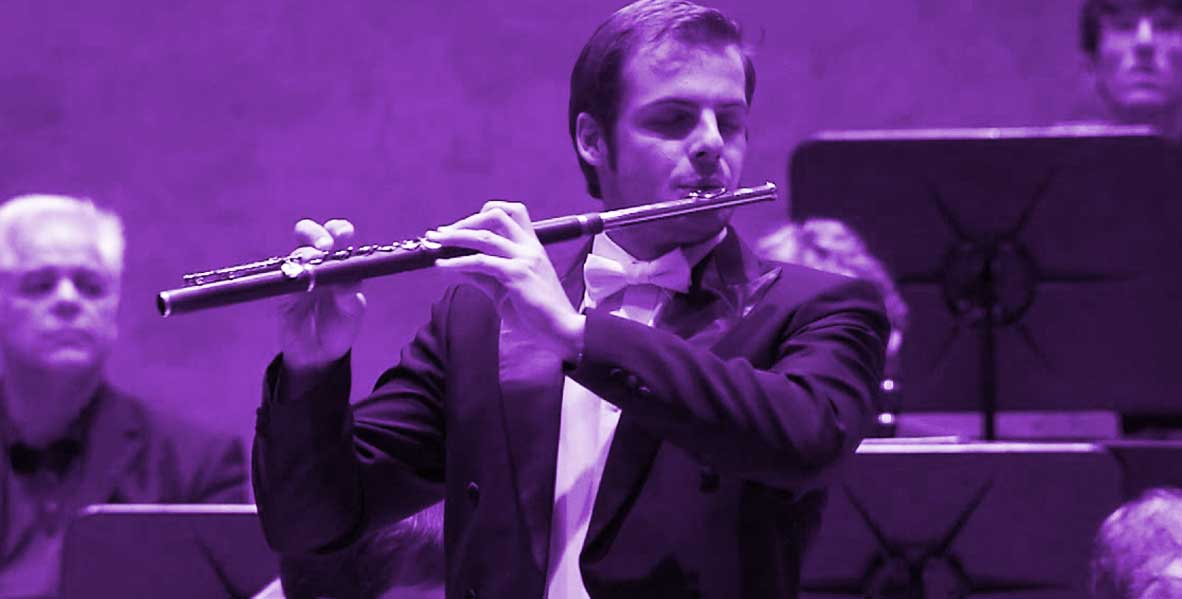
Sebastian Jacot playing Reinecke Flute Concerto
Aristotle, praising with faint damnation, was said to remark that ‘The flute is not an instrument that has a good moral effect – it is too exciting.’
We’re not so sure that playing the flute is sinful, but we are very certain that some wonderful music has been written for it over the last few centuries. And at the very apex of the repertoire stands the concerto, the form which allows maximum space for technical and expressive elaboration. Here, then, are what we consider to be the pinnacle of the pinnacle, the ten best concertos for this most exciting, if not most morally upright of instruments.
One of the liveliest, most charming Baroque works for flute, Vivaldi’s Concerto in D major, Op. 10, No. 3, 'Il gardellino' is also one of the most enduring popular. The title ‘Il gardellino’ (‘The Goldfinch’) refers to the birdlike figures the solo line, particularly in the opening movement, where the flute imitates the fluttering and calls of the bird.
C.P.E. Bach’s Flute Concerto in D minor, Wq. 22 is an example of the Empfindsamer Stil (“sensitive style”), a musical language characterised by emotional contrasts and sudden expressive shifts, qualities especially apparent in the dramatic first movement and the intensely lyrical slow movement.
Mozart had a problematic relationship with the flute, famously (though possibly apocryphally) joking ‘What's even worse than a flute? — Two flutes!’ Despite his reservations, however, he still managed to write beautifully for the instrument, his Flute Concerto No. 1 in G major, K. 313 today being regarded as the most important work in the literature. Written in 1778 during a trip to Mannheim for Dutch flautist Ferdinand De Jean, it is full of sparkling melodic invention and graceful classical balance. The slow movement is especially admired for its operatic lyricism.
Carl Stamitz’s was a member of the celebrated Mannheim School, which did much to standardise classical playing techniques and musical forms. His Flute Concerto in G Major reflects the brilliant orchestral techniques associated with Mannheim, including dramatic crescendos and virtuosic solo passages. It is also noted for its similarity in tonality, form, structure and elegance to Mozart’s concerto of 1778.
Devienne, often described as the ‘French Mozart’ was a virtuosic flautist and composer of some 300 works, including around a dozen concertos for the flute. Of these his finest is his Concerto No.7 in E minor. It blends the high Classical style with virtuosic and dramatic writing that presages the Romantic era, making this a key transitional work.
The nineteenth century did not produce many great flute concertos, making Molique’s Flute Concerto in D minor particularly precious. Elegant and maturely classical, it is also a key work in the technical development of the instrument—Molique wrote the piece in collaboration with Theobald Böhm, the legendary designer of the modern flute. Molique substantially revised the work in 1863 while teaching at the London Academy of Music, shortly before his retirement.
Written in 1908, Carl Reinecke’s Flute Concerto in D major, Op. 283 is widely considered the last great flute concerto of the Romantic era. Written when Reinecke was 84 years old it blends traditional structural clarity with deep emotional expression. Though it contains more than a hint of nostalgia for the music of a vanished century, its dazzlingly virtuosic rondo finale suggests Reinecke, despite his advanced years, was still brimming with youthful sparkle.
Though not strictly a concerto, Chaminade’s Concertino for Flute and Orchestra, Op. 107 earns its place on the list by sheer force of personality. A compelling blend of sumptuous melodies, quasi-impressionist flourishes and grand diatonic perorations the music has a bit of everything, while the mercurial central scherzando is a thing of pure joy.
Nielsen planned to write a concerto for each member of the Copenhagen Wind Quintet, though only a Clarinet Concerto and this Flute Concerto, written for Holger Gilbert-Jespersen, were realised. Spiky and neoclassical in style, it blends modernistic trends with the composer's unique humour and character-driven orchestration—the concerto is famous for its "dialogues" and occasional "battles" between the flute and other instruments, most notably the bass trombone.
10. Ibert Flute Concerto (1934)
Mozart aside, this is probably the most frequently performed of all flute concertos: a twenty-minute romp composed in 1932 and showcasing Ibert’s musical style at its eclectic best. The first two movements mix spiky neoclassical figuration and jazzy harmonies with more conventional lyrical outpourings, although it’s the catchy syncopations of the riotous finale which really get the blood pumping.