April 29, 2026 | Author: Dominic Nicholas | Category:Instruments | Cello
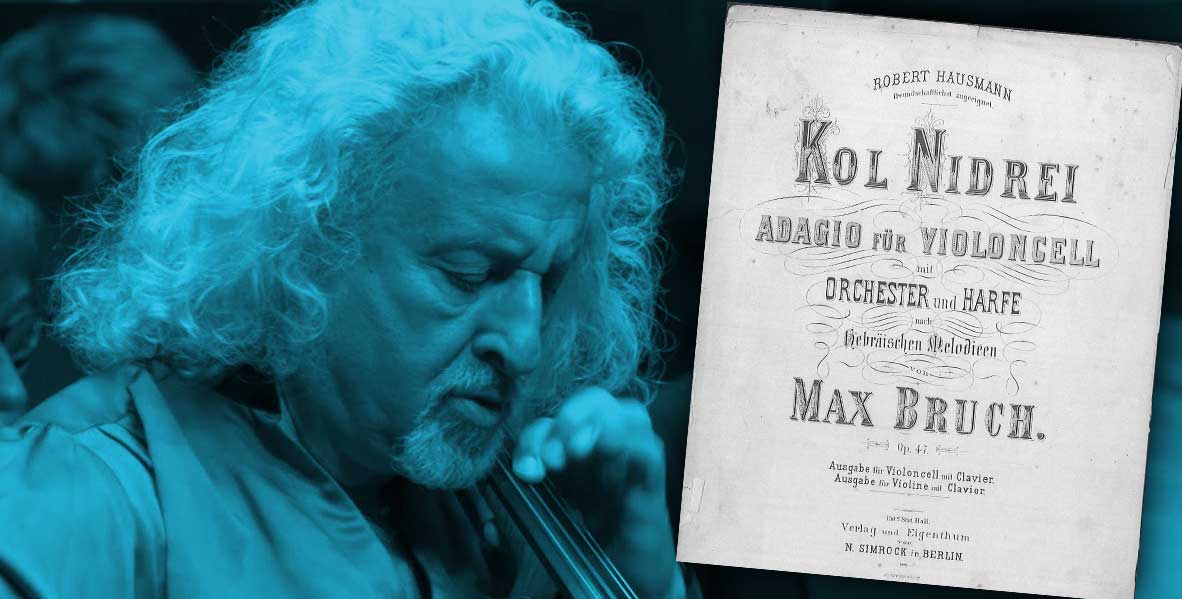
Mischa Maisky playing Kol Nidrei
Haunting, expressive, deeply personal, Kol Nidrei, for cello and orchestra (1880) is perhaps Max Bruch’s most moving piece and certainly amongst the most beloved of all works written for cello. It is also one of our most sought after pieces here on 8notes — we have the complete piece, a more accessible simplified version as well as versions for other solo instruments, so you don’t need to be a cellist to play this marvellous music.
How many of us, however, stop to consider the curious title of this work? What does it mean? And why did Bruch choose it?
It’s a fascinating story involving religion, friendship and cross-cultural sharing…
What does Kol Nidrei mean?
Kol Nidrei is Aramaic for ‘All Vows.’ It is essentially a formula that initiates the holiest and most solemn day of the year in Judaism, Yom Kippur, which is dedicated to repentance, spiritual renewal and the seeking of forgiveness.
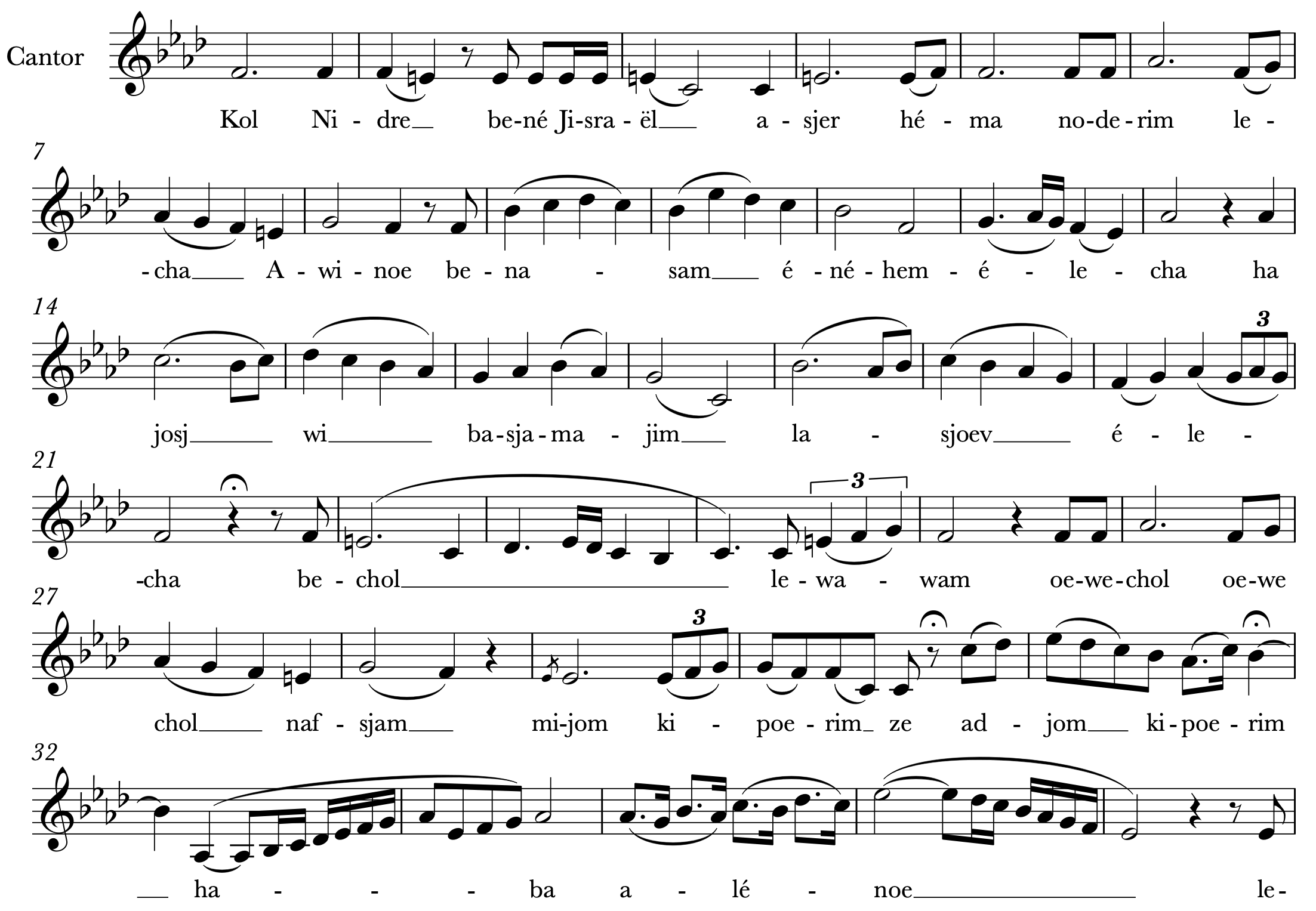
The formula is sung by a cantor using an ancient and traditional melody, also known as Kol Nidrei (or 'Kol Nidre'). This may be flexibly interpreted by the cantor, but its essential melodic outline is fixed:
Original Kol Nidrei chant
Bruch uses this melody at the opening of his own work, the solo instrument essentially taking on the role of cantor.
Was Bruch Jewish?
No. Bruch was a Protestant, though his identification with this piece has led many to believe that he was. The Nazis, for example, later banned and restricted performances of his music in Germany.
So how did Bruch come to to write this piece?
Bruch was friends with cellist Robert Hausmann, who repeatedly asked Bruch for a major solo work to rival the composer’s famous violin works. Hausmann was also not Jewish, so in fulfilling his friend’s wishes, Bruch’s choice of a Jewish melody might seem unusual.
Bruch had, however, long been interested in Jewish folk music and was friendly with the Lichtenstein family in Berlin, the head of which, Abraham Jacob Lichtenstein, served as cantor-in-chief in the city. In the period 1880–83 Bruch was also Principal Conductor of the Liverpool Philharmonic Orchestra, a city with a strong Jewish community. It was for this community that Bruch specifically wrote the work, even though it was dedicated to and premiered by Hausmann.
Not one Jewish tune, but two
Bruch was careful to describe his work as an ‘arrangement’ and not an entirely original composition, and with good reason—the piece is essentially a set of variations on not one, but two Jewish melodies. The first, Kol Nidrei, is heard at the opening of the work. The second subject of the work is a quotation of Isaac Nathan’s arrangement of Oh! Weep for Those that Wept on Babel's Stream, a melody of Jewish origin, with lyrics from Lord Byron’s ‘Hebrew Melodies:’
Accusations of cultural appropriation
Bruch’s treatment of Jewish melodies has been seem by some commentators as lacking in cultural sensitivity. The founder of Jewish musicology, Abraham Zevi Idelsohn, wrote in 1929 that:
In his presentation, the melody entirely lost its original character. Bruch displayed a fine art, masterly technique and fantasy, but not Jewish sentiments. It is not a Jewish Kol-Nidre which Bruch composed.
Others have criticised Bruch for decontextualising an essentially sacred melody and turning it into Western secular concert music. Jewish composer Arnold Schoenberg was particularly critical, explaining his reasoning for writing his own, more austere setting in 1938:
One of my main tasks was vitriolising out the 'cello-sentimentality of the Bruchs, etc. and giving the DECREE the dignity of a law, of an ‘edict.'
Schoenberg: Kol Nidre, Op. 39 (the melody appears in bars 58–63):
Despite such criticisms, it is important to see the work in context. Bruch’s use of Jewish themes was not unthinking appropriation—itself a modern idea—but a result of his friendships and ties to the Jewish community. He also had long standing respect for and interest in such source material. That he produced such a ‘masterly' (to use Abraham Zevi Idelsohn’s own word) treatment of the melodies might also be considered evidence enough of his care and respect. It is, therefore, perhaps unsurprising that the work remains so popular today, including amongst Jewish musicians.