The Masterpiece Rachmaninoff wished he'd never written
March 13, 2026 | Author: Dominic Nicholas | Category:Discover
Rachmaninoff
There have been many artists that have developed love-hate relationships with their own compositions. Tchaikovsky considered his 1812 Overture to be ‘without artistic merit’, Ravel said his Bolero had ‘no music in it’ and Liam Gallagher said of Oasis’s hit song ‘Wonderwall’, ‘Every time I have to sing it I want to gag.’
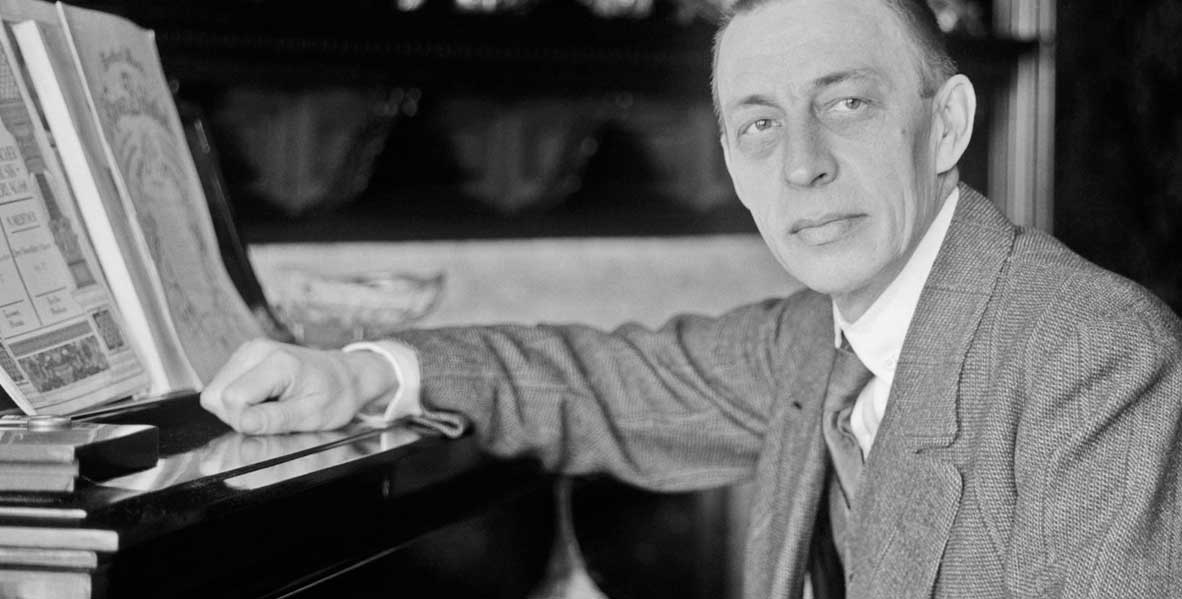
Though not expressed in such earthy terms, Rachmaninov developed a similar relationship with his Prelude in C-sharp minor, Op.3 No.2. One of his most popular compositions, audiences demanded it as an encore so frequently that the composer began to refer to it as his ‘Frankenstein’ piece, concluding that ‘Many, many times I wish I had never written it.’
A youthful masterpiece
The piece was one of the first written by Rachmaninoff after he graduated from the Moscow Conservatory in 1892 at the age of 19. He first performed it at a concert at the Moscow Electrical Exhibition on 26 September 1892.
It is organised in three parts (ABA), opening with a tolling three note motif that repeats underneath a series of portentous chords. The effect is dramatic and filled with more than a little existential dread. This is only increased by the agitato middle section, which superimposes restless triplets over a weaving, heavily chromatic melody that moves higher and louder before dramatically crashing back to earth. The opening material reappears, now marked triple-forte, before gradually fading into a coda consisting of a series of mysterious chords.
Sepulchral speculation
The sepulchral nature of the work has led many to speculate about Rachmaninoff’s source of inspiration for it. One story has the composer penning it after waking from a disturbing dream in which he’d imagined himself at a funeral, only to find that it was he himself inside the coffin.
Some have argued that the number three plays a significant role in the work—that he woke from the dream at 3am, that the piece is in ternary form, opens with a three-note motive and contains many triplets and triadic thematic material. Though plausible, this does not really explain the work’s aura of dread, three in Christian cultures being not associated with the death, but with the divine perfection of the Trinity and the resurrection (Jesus rose on the third day).
Perhaps, then, it is better if we listen to Rachmaninoff’s own explanation. When asked why he wrote it, he merely said ‘forty roubles… My publisher offered me two hundred roubles for five short pieces for piano and that prelude was one of them.’ Sometimes a piece of music is simply the way it is.
The work goes viral
The first performance of the work went largely unnoticed by an indifferent public, but Rachmaninoff’s cousin, the pianist Alexander Siloti decided to include the work on a tour of Western Europe and the United States in the autumn of 1898. The piece became a sensation, with publishers across the world producing editions of it. It soon became a frequently requested encore in Rachmaninoff’s own concerts, much to the composer’s chagrin.
Part of the composer’s annoyance at having to play the piece may be because, after selling it, he never saw another rouble, penny or cent from it— at the time Russia did not subscribe to the Berne Convention for the Protection of Literary and Artistic Work, so did not play royalties to composers.
In popular culture
The piece continues to be popular today, both in its original for for piano and in its many arrangements (we have 20 and counting to choose from here on 8notes).
It has also made its way into popular culture, appearing, for example, in an episode of Lost (season 4, episode 9)…
…in Dan Simmons’ space opera novel ‘Hyperion’, which opens with the evocative line ‘The Hegemony Consul sat on the balcony of his ebony spaceship and played Rachmaninov’s Prelude in C-sharp minor on an ancient but well-maintained Steinway while great, free, saurian things surged and bellied in the swamps below’…
….and, to hilarious effect, in Walt Disney’s 1929 Mickey Mouse animated short, The Opry House:
Of this Rachmaninoff is said to have told Walt Disney: ‘I have heard my inescapable piece done marvellously by some of the best pianists, and murdered cruelly by amateurs, but never was I more stirred than by the performance of the great maestro Mouse.’