February 16, 2026 | Author: Dominic Nicholas | Category:News
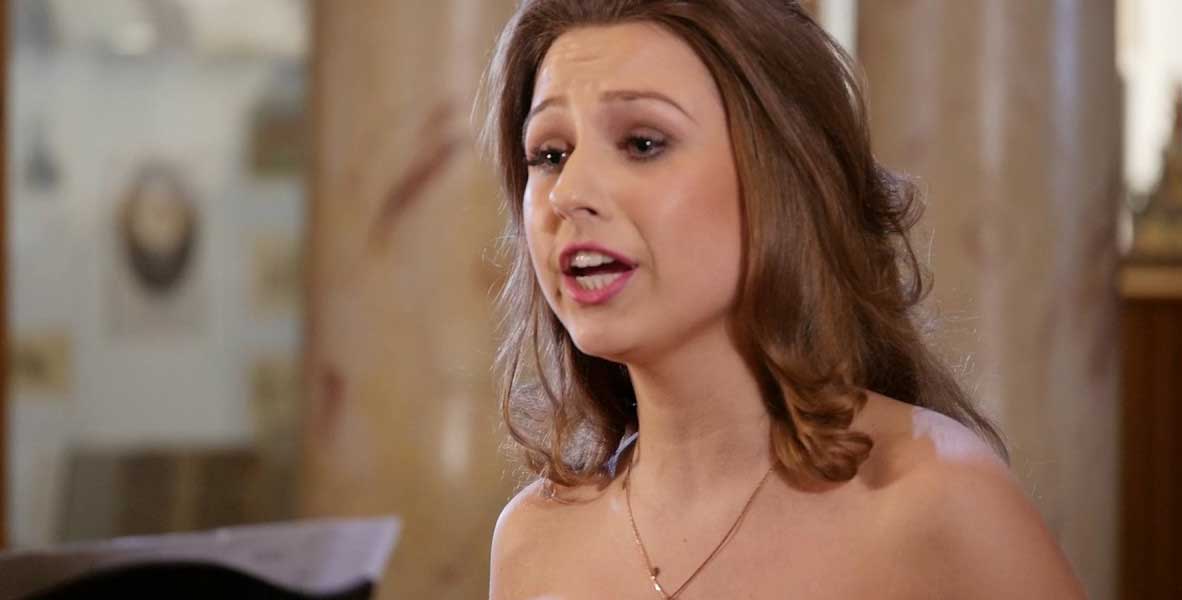
Oksana Lepska
The Romantic era marked the maturation of the solo song or ‘lieder’ into one of classical music’s most imitate and expressive forms. Whilst an opera might tell a story over the course of many hours, using all the paraphernalia of orchestra, chorus and team of star singers; the solo song, often accompanied by piano alone, fused poetry and music into emotionally charged drama lasting just minutes.
It would be enough of a challenge to find 10 definite song cycles from this incredible rich period of music history. We will go one further, choosing our very favourite single songs, with each composer being represented by one song each.
These pieces are not just for singers; they also make great instrumental solos—follow the links to find our exclusive arrangements of them!
Known for its structural coherence and intense monodrama, Winterreise stands at the pinnacle of early Romantic lieder. One of Schubert’s many acts of genius was to elevate the piano to equal protagonist. In 'Der Lindenbaum’ (‘The Linden Tree’), the emotional core of this work, the piano rustling figures evoke the whispering leaves, acting as a foil to the folk-like simplicity of the voice.
Dichterliebe was written during Schumann’s legendary ‘year of song,’ in which he composed four substantial song cycles.
Im wunderschönen Monat Mai (‘In the lovely month of May’), the opening song of this cycle, quotes directly from Clara Wieck-Schumann's Piano Concerto in A minor. It sets the scene for a world of tender longing and emotional ambiguity, one where love is shrouded in uncertainty, eloquently represented by the unresolved harmony of the piano postlude.
Though Brahms’ ‘Von ewiger Liebe’ (‘Of eternal love’) does not form part of a narrative song cycle, in just four and a half minutes this powerful ballad tells the dramatic story of lovers defying fear and social pressure in the darkness of night. Harmonically rich and yet with folk-like directness the song is almost symphonic in its emotional scope.
Après un rêve (“After a Dream”) is one of the most well-known French mélodies, from one of France’s greatest composers for voice. It is also a great example of how Faure revolutionised French song by favouring restraint over operatic drama—the song’s melody seems to float over the constantly shifting harmonies that mirror the dreamlike quality of remembered love.
Though written when still a teenager, Beau sour (‘Beautiful Evening’) shows a precocious mastery of the form, painting a remarkably vivid picture of a peaceful evening tinged with melancholic reflections on life. The unpredictable but elegantly handled shifts in harmony presage both Debussy’s mature style and the harmonic revolutions of the early twentieth century.
Tchaikovsky’s ‘None but the Lonely Heart’ (‘Нет, только тот, кто знал’) is a deeply personal and melancholic exploration of the pain of loneliness. The loveliness of its aching melody has made it very popular as a solo piece for instruments as well as for voice.
Rachmaninoff’s Vocalise would be a candidate for his most famous work for voice, but that piece is for singer without words, disqualifying it from our selection. No matter, since Lilacs is just as lovely. Over a shimmering piano texture evoking the scent and softness of spring blossoms the voice seems to hover suspended in space. Harmonically it is unmistakably Rachmaninov, lushly representative of the final flowering of late Romanticism.
Solveig’s Song is from his incidental music for Ibsen’s play, most often heard today as his Peer Gynt Suites No. 1 and 2. This song, however, has developed an independent life as one of music’s most touching expressions of love. Its melody fuses Nordic folk simplicity with the Romantic style to powerful effect.
Another great example of the fusing of national styles and broader Romantic trends, Dvořák’s ‘Songs My Mother Taught Me’ is probably the most universally loved Czech art song. As an evocation of childhood memory and maternal tenderness it is unsurpassed.
Mahler’s song represents the culmination of Romantic introspection, where the singer withdraws from the world and into a realm of transcendent inner peace. It marks a final flowering of the late Romantic style, its lush harmonies seeming to look back melancholically even as they presage a musically turbulent century.