February 23, 2026 | Author: Dominic Nicholas | Category:News
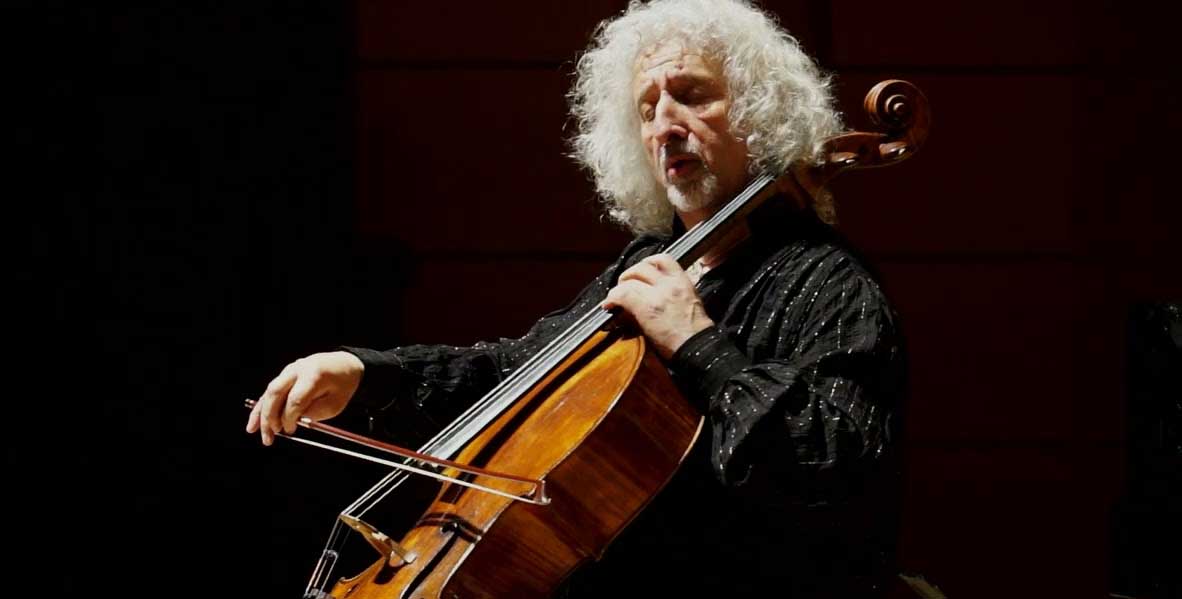
Cellist Mischa Maisky
Choosing the very best sonatas for the cello is quite a challenge - the literature is rich and deep, with many composers contributing several great works, all of which might be worthy of inclusion. To help, we’ve limited this difficult task to one piece from each composer, aiming for a wide historical spread, giving a selection of works that trace the history of this form from its emancipation in the hands of Beethoven, to the heart of the tumultuous twentieth century.
Whilst not exactly genesis, Beethoven’s Sonata No.3 does mark a turning point in the form. Prior to it, cello sonatas tended to be dominated by the piano, with the cello even sometimes functioning as an accompaniment. This work established the two protagonists as equals. Stylistically the work is expansive and lyrical but symphonic in scale, defining the cello sonata as a serious art form, in turn posing a challenge to all composers who were to follow.
This work was written for arpeggione, which was briefly popular after its invention in 1823, eventually finding a permanent home on the cello. It’s easy to see why the work survived, even as the instrument it was written for faded into oblivion; Schubert’s melodic gifts permeate every moment, particularly the opening Allegro, where the cello line unfolds with vocal-like warmth and a quiet melancholy.
Written towards the end of his life, Mendelssohn’s four movement sonata is energetic, elegant and brilliantly constructed. The work combines classical formal clarity with Romantic vitality, making it a great example of the mid-Romantic chamber style. Its slow movement, however, looks further back for its influence, consisting of a chorale-like movement heavily influenced by Bach.
Chopin’s Cello sonata is a precious work; he wrote only four sonatas during his life, three of which were for piano and this one for cello. The piano writing remains richly idiomatic, but the cello is treated as an expressive equal, especially in the elegiac Largo. It is remarkable for its thematic unity; the first movement grows out of the cello’s opening statement, whilst all the movement share certain thematic shapes.
If the tendency of other Romantic works was to elevate the role of the cello as soloist, Brahms pointedly titled his Cello Sonata No.1 as ‘Sonata for piano and cello,’ in that order. In doing so he restored the piano as full partner, with the instruction that it ‘should under no circumstances assume a purely accompanying role.’ Drawing heavily on the influence of Baroque counterpoint, particularly that of J.S. Bach, the work is dark, introspective and intellectually rigorous.
Grieg’s three movement sonata blends Romanticism with a distinctly Nordic voice, expanding expressive palette of the genre beyond the German tradition. The work was dedicated to his brother, a keen amateur cellist, and premiered by Friedrich Ludwig Grützmacher, with the composer at the piano. Though sometimes criticised for the borrowing of themes from other of Grieg’s works, the piece is noted for its passionate, emotional and singing style and for a grandeur that echoes that of his Piano Concerto of 1868.
Rachmaninoff’s Cello Sonata marks the Romantic high-watermark of the genre. Like Brahms before him, Rachmaninoff regarded the piano as equal protagonist. As such, as for example in the gorgeous slow moment, it often takes the lead, introducing themes, maintaining a concerto-like level of complication even as the cello outlines long-breathed melodies above. For lush harmony, sweeping melody and unapologetic emotional intensity, few works come close.
Written towards the end of his life, Debussy’s Cello Sonata brings us firmly into the twentieth century. In Debussy’s mature style, it blurs tonal harmony with the inclusion of church modes, whole tone and pentatonic scales and also makes use of the type of extended techniques that would go on to form the backbone of twentieth century string writing. Structurally it is compact (around 10 minutes in performance), fragmentary, and coloristic, reimagining the cello’s expressive role more through timbre and gesture than through thematic development.
The only work on this list for cello without piano, Eugène Ysaye’s Sonata is a virtuosic pillar of the repertoire, written around the same time as his celebrated Six Sonatas for Solo Violin. Ysaye himself was a virtuoso violinist, but retained a deep affinity for the cello, which he studied in his youth. The sonata is dedicated to Belgian cellist Maurice Dambois and is known for its tortured darkness, motoric energy, and technical difficulty on par with his solo violin works.
Prokokofiev’s Cello Sonata in C major, Op. 119, written towards the end of his life, stands in contrast to the ‘enfant terrible,’ more dissonant style of his earlier works. It was written during a period of intense Soviet censorship following the 1948 Zhdanov Decree that accused him of ‘formalism.’ Prokofiev’s reaction to this was to produce a work that, whilst stylistically firmly of its time, is nevertheless celebrated for its miraculous simplicity and lyrical warmth.